Matter
Ten years of Higgs discovery
As members of the ATLAS particle detector experiment at CERN, researchers from the University of Bern played a key role in the sensational discovery of the Higgs boson 10 years ago. The Albert Einstein Center (AEC) and the Laboratory for High-Energy Physics (LHEP) at the University of Bern hosted an anniversary event with a film screening.
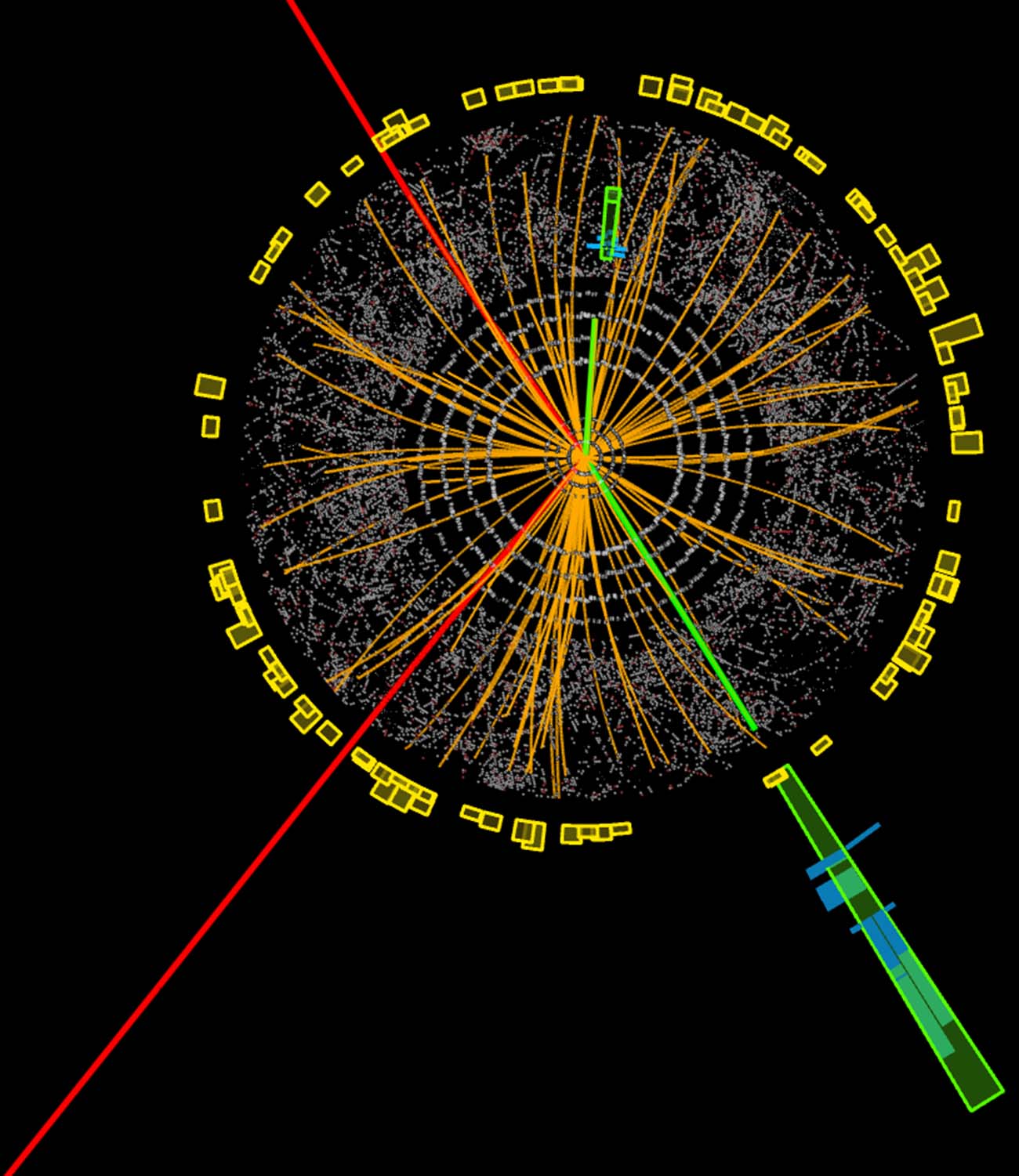
It was a milestone in particle physics: On July 4, 2012, the European Organization for Nuclear Research (CERN) in Geneva announced the discovery of the Higgs boson. With the sensational proof of the existence of an elementary particle, which gives all other particles their mass, a large gap was closed in the standard model of particle physics, which describes known matter in the universe. In 2013, the discovery was even awarded the Nobel Prize in Physics.
The Higgs particle was detected 10 years ago at CERN with the Large Hadron Collider (LHC), the world’s most powerful particle accelerator. ATLAS, the largest particle detector at the LHC, was instrumental in the discovery. Particle detectors record the particles formed during collisions in the accelerators. The University of Bern was a founding member of the ATLAS experiment and, together with the Albert Einstein Center and the Laboratory for High-Energy Physics (LHEP), continues to play a major role in its operation and development.
Research institutions around the world celebrated the tenth anniversary of this discovery on July 4. The Albert Einstein Center (AEC) and the Laboratory for High-Energy Physics (LHEP) at the University of Bern also celebrated the day with a public anniversary event.
The University of Bern and the ATLAS experiment
Die Universität Bern und das ATLAS-Experiment
The ATLAS detector is the largest of the four detectors installed in the Large Hadron Collider (LHC) at CERN. The University of Bern was a founding member of the ATLAS experiment. The Bern-based ATLAS Group was founded in the 1990s and has made important contributions ever since. In 2012, the ATLAS detector was used to detect the long sought-after “God particle”, the Higgs boson. Researchers from Bern at the Albert Einstein Center (AEC) and at the Laboratory for High-Energy Physics (LHEP) made significant contributions to the selection of collision events, their recording and analysis. The discovery of the Higgs boson was awarded the Nobel Prize in Physics in 2013.